
It is common to meet with people whose naturalization application was denied at first instance by the Civil Registry, on the grounds that they supposedly did not meet the required length of residency in Costa Rica. These people were refugee applicants, and that time was not counted toward the five-year period the law establishes. That denial is a violation of their rights as refugee applicants, for the reasons explained below.
From the moment a person obtains their Refugee Applicant document, their immigration status is regularized and they gain access to a DIMEX, a document that will accompany them under any other immigration category they later hold, in compliance with the regulation governing the procedures, requirements, and criteria for naturalization resolutions.
The Regulation for that resolution, number 12-2012, sets out in article 8 the requirements the application must contain, stating: "Anyone applying for naturalization by residency must submit an application that includes the following: d.- Identity document number. This document must be the one issued by the General Directorate of Migration and Immigration under the granting of an immigration category, or the one issued by the Ministry of Foreign Affairs and Worship under the granting of an official stay condition in the country".
What is the DIMEX in Costa Rica?
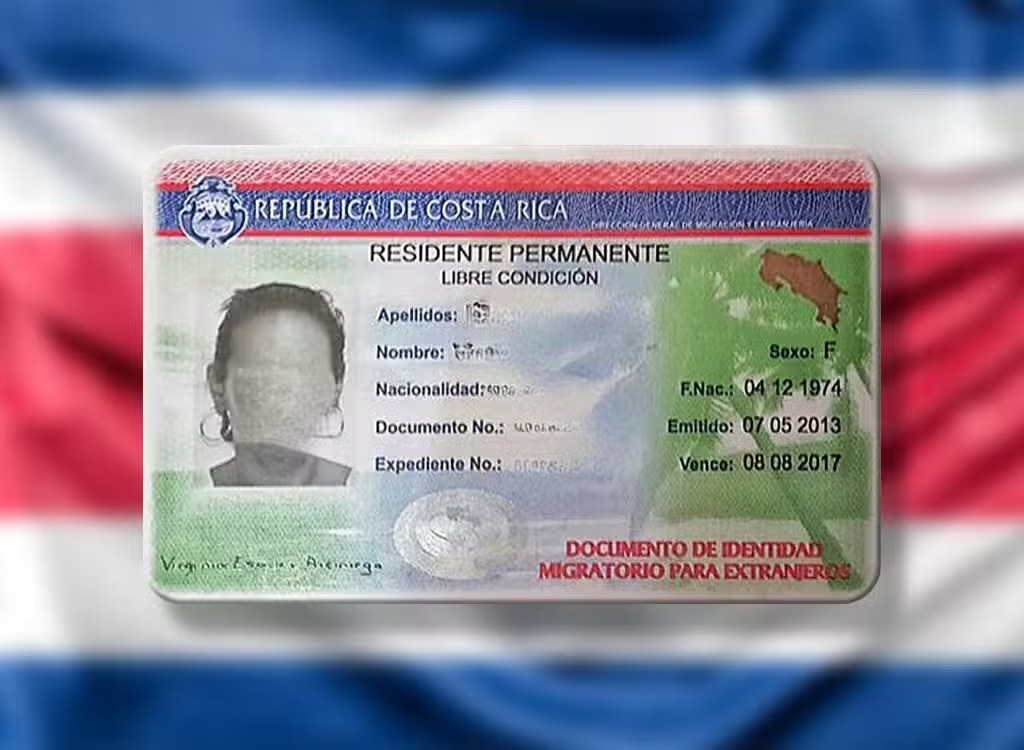
DIMEX stands for Documento de Identidad Migratorio para Extranjeros (Immigration Identity Document for Foreigners). Its use within Costa Rica’s unified numbering system should have begun in 1984, but for foreign nationals it was not implemented until the end of 2018, when the databases of the Immigration Management office and the Refugee Unit were unified, in compliance with Executive Decree 15126, which orders every institution that issues identification numbers to use uniform numbers for individuals.
As part of that 2018 unification process, Refugee Applicants were integrated into the DIMEX System, under articles 54 and 55 of the Refugee Regulations (Executive Decree No. 36831-G). That is why the DIMEX of a refugee applicant is a white card that reads "Provisional Refugee Applicant Card" or "Special Category R" / "Special Category R Work Permit", under Circular DG-12-02-2023 of the General Directorate of Migration and Immigration.
What do the digits on the DIMEX mean?
The DIMEX of refugee applicants follows the same format as any other immigration document issued by the General Directorate of Migration and Immigration, under Executive Decree 15126: a twelve-digit number for foreign nationals, broken down as follows:
- The number 1: indicates the person is a foreign national.
- The next three digits: refer to the person’s country of origin, based on the WITS system country code table (built on 3-letter ISO codes and the 3-digit numeric codes from the United Nations Statistics Division, UNSD).
- The next six digits: refer to the number of people of that nationality living in Costa Rica at the date that DIMEX was issued.
- The last two digits: are the internal verification code of the General Directorate of Migration and Immigration.
Does time as a refugee applicant count toward naturalization?
Constitutional Chamber Resolution No. 17845-2024 recognized that a refugee applicant’s immigration status is temporarily regularized and, as a result, their stay in the country is legalized — meaning they hold official residency in Costa Rica — under the same conditions applied to a person granted refugee status.
Based on article 9.B.1 of the Regulation governing the procedures, requirements, and criteria for naturalization resolutions (No. 12-2012): "Anyone applying for naturalization by residency must demonstrate (…) b.- Having officially resided in Costa Rica for the periods established in article 14 of the Political Constitution (…) b.1.- five years for nationals of other Central American countries, Spaniards, and Ibero-Americans by birth".
And under article 11, subsection d) of the same regulation: "Official residency in the country must be demonstrated through the following evidence: (…) d.- The Options and Naturalizations Section will request from the General Directorate of Migration and Immigration a certification indicating all the immigration statuses the applicant has held up to the date the application was filed".
That certification of all immigration statuses must include, so as not to violate the rights of refugee applicants, the Refugee Applicant status — either requested by the Civil Registry or provided by the applicant, from the General Directorate of Migration and Immigration. The Refugee Unit is the office that issues the refugee applicant card (article 55 of the Refugee Regulations) and the one that must certify the time the person held that status. To prove it, all expired cards, notarially certified, must be submitted.
If the Civil Registry has denied or questioned your naturalization application because of your time as a refugee applicant, this is an issue worth reviewing with legal support. Schedule a consultation to evaluate your case.